
India's official COVID-19 tally on Wednesday was 4,18,480 (4.18 lakh), the third highest in the world after the US and Brazil.

The recovery seen in the increased economic activity till September or October is running out of steam. Labour statistics indicate a substantial slowing down of the economy in November, notes Mahesh Vyas.

The biggest loss of jobs among salaried employees was of 'white-collar professional employees and other employees'. Among these are engineers including software engineers, physicians, teachers, accountants, analysts and so on, who are professionally qualified and are employed in some private or government organisation All the gains made in their employment over the past four years were washed away during the lockdown, reveals Mahesh Vyas.

Neither the CAA nor the proposed NRC are important enough to stake the well-being of so many or stake economic growth. Getting growth back on track is more important, notes Mahesh Vyas.

Rising unemployment rate reflects a rise in the labour participation rate, which in India's case has been worryingly low.

For the time being, digital lending remains a grey area, notes Tamal Bandyopadhyay.

The biggest worry is not the shrinking of the labour market, but the collapse of good jobs.

The loss of job opportunities in recent times has been so severe that labour stopped even looking for jobs, says Mahesh Vyas.

E-learning and work from home have forced a section of feature phones users to shift to smartphones.

There is an attempt to brush aside the results of all surveys that point to a deteriorating jobs situation. This is counter-productive, says Mahesh Vyas.

We asked colleagues, present and past, to reflect on a man who has made such a difference to their lives and careers. Here it is then, a rich collection of memories that offer enchanting glimpses of the enigmatic Ajit Balakrishnan.

For the first time, consumers, including those at the so-called bottom of the pyramid, are monetising gold by taking loans from banks, offering the yellow metal as collateral, says Tamal Bandyopadhyay.

'As our per capita income increases and various demographic segments emerge, the need for various kinds of protection and risk covers will become even more explicit.'
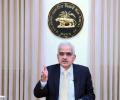
The challenge for the RBI in 2024 is likely to be less about containing elevated inflation and more about curbing excessive financial market exuberance and a 'problem of plenty', notes Sajjid Chinoy, Chief India Economist JP Morgan.

Retail sales of cars are back to January 2018 levels in August 2021. Two-wheeler retail sales are 22 per cent lower, nearly four years down the line.

While taking gold out of the closet to borrow money is no longer taboo in Indian households, the sharp drop in gold prices is hitting the newest loan product on the banking turf hard, explains Tamal Bandyopadhyay.

Given the sheer size of the state, achieving a similar turnaround in Punjab as promised could be a different ball game altogether, reports Sai Manish.

We could be on the brink if our export industries actually start losing jobs, says Shreekant Sambrani.

As India emerges from the COVID-19 crisis, the ninth budget under the Modi government, including an interim one, is widely expected to focus on boosting spending on job creation and rural development, generous allocations for development schemes, putting more money in the hands of the average taxpayer and easing rules to attract foreign investments.

'Without bold action to deal with our banking crisis, count on the economy's doldrums to continue for much longer than most of us anticipate,' says Rahul Jacob.

Finding a solution is critical to prevent a crisis from blowing up.

The growth rate could continue for another seven years.

Finance Minister P Chidambaram, while addressing the Carnegie Endowment for International Peace on "Recapturing India's Growth Momentum" in Washington on Thursday, said that the leading think tank need not launch an initiative to explore how India will vote in 2014, declaring that the Indian polity will vote the Congress back into power.

Stay ahead of the game; learn the tricks from Ecom king Jack Ma.
